Brain Challenge Zone
Train your brain with challenges inspired by AI and neural networks. Each puzzle helps develop critical thinking skills essential in the age of artificial intelligence.

Cognitive Learning
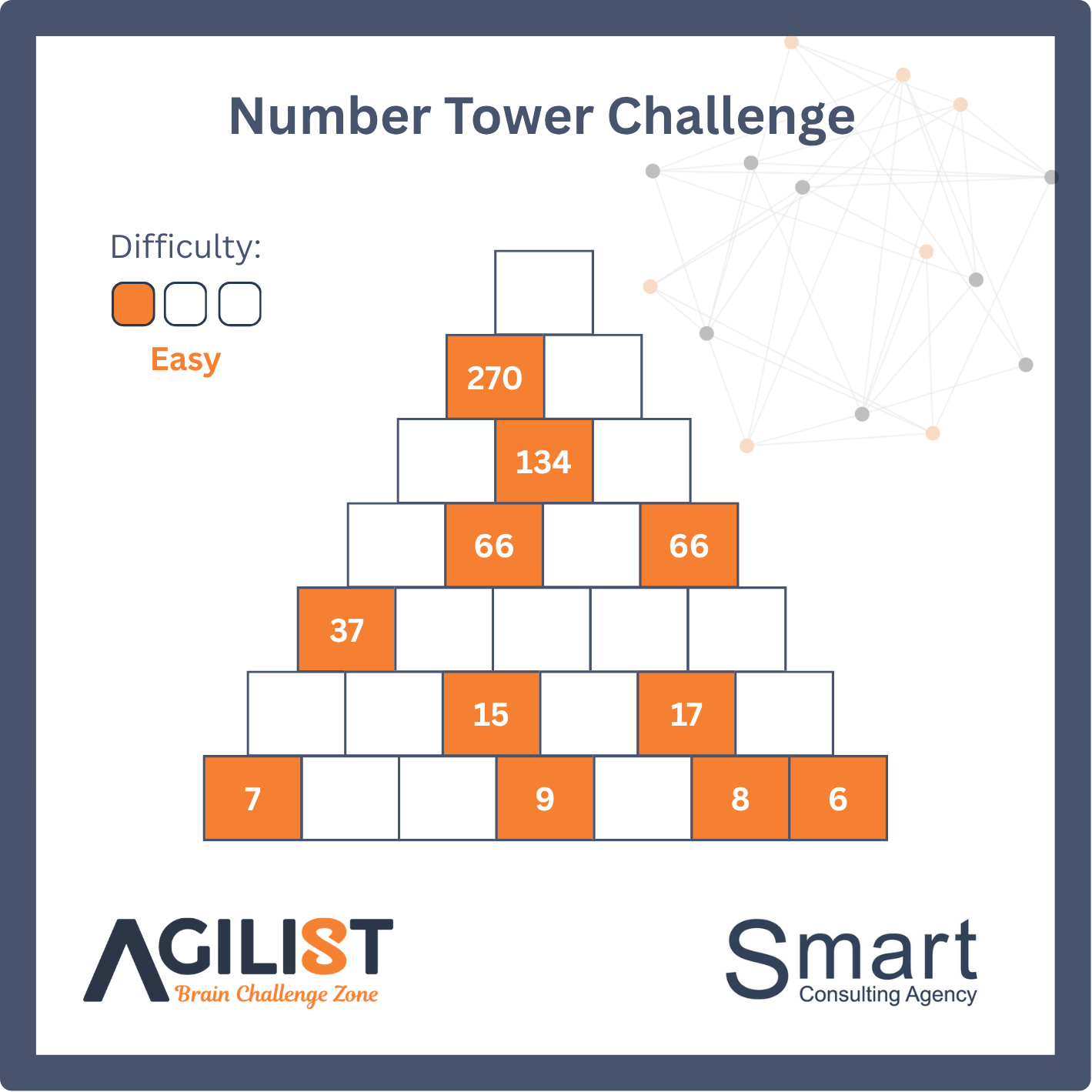


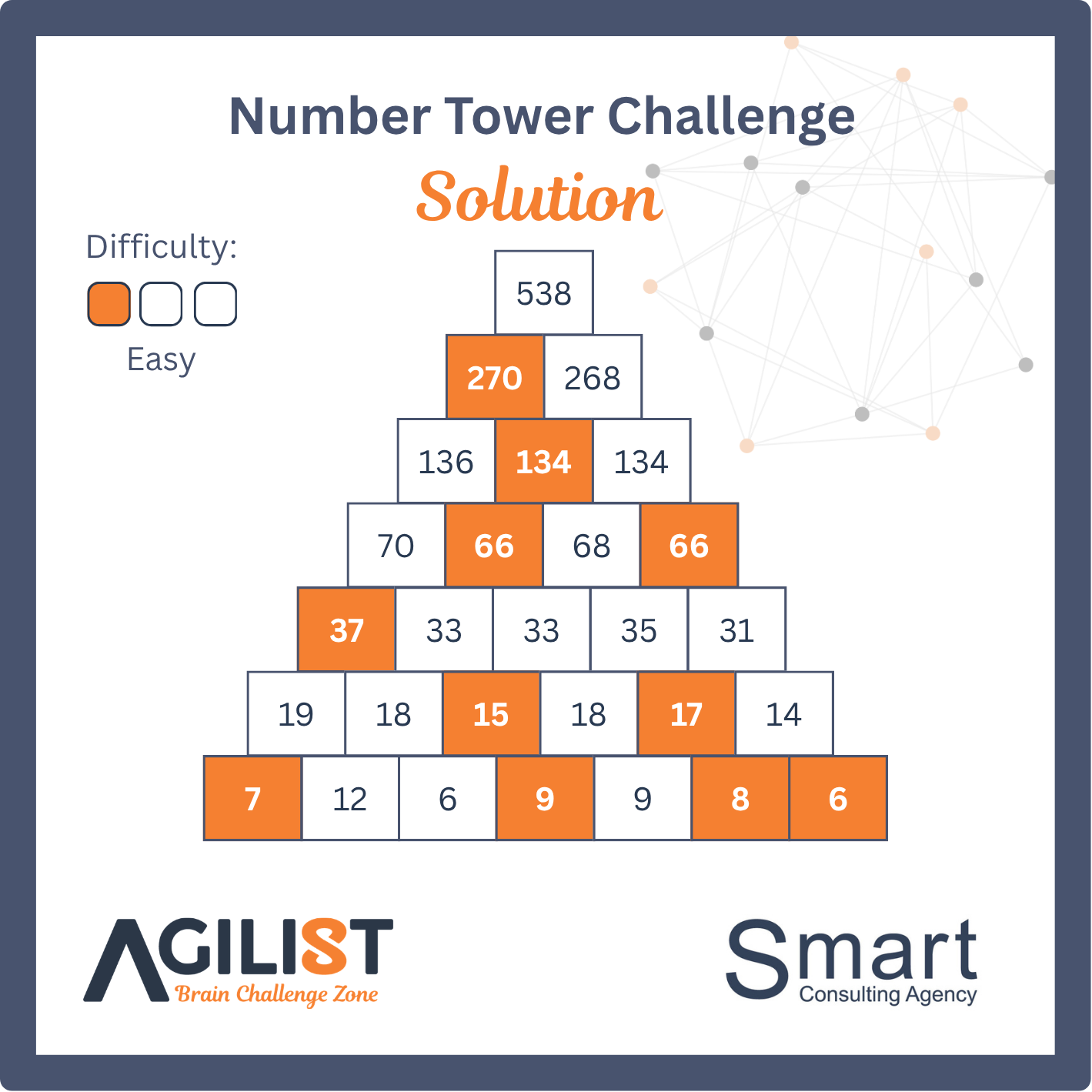
Number Tower Challenge
Challenge your brain with this mathematical puzzle that mimics how neural networks process information layer by layer.
📋 Instructions

Download Puzzle & Solution
Synapse Matrix
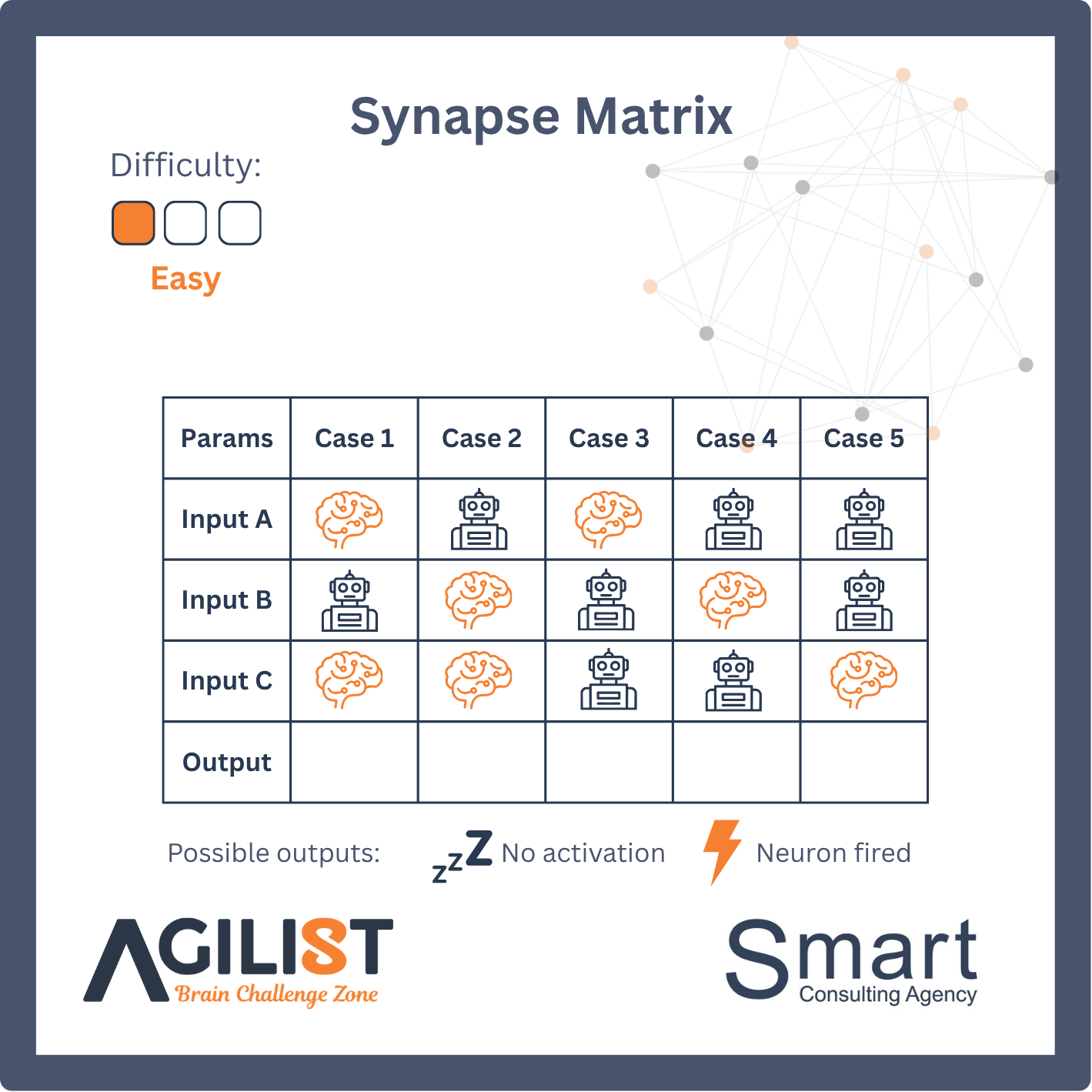
Decode the pattern recognition logic of neural networks. This puzzle simulates how error-detection neurons fire when they encounter unexpected patterns, teaching you how AI systems identify anomalies and imbalances in data.
📋 Instructions
- Observe three rows of inputs (A, B, C).
- For each column, count how many appear.
- If the number is odd → ⚡, even → 💤.
- It fires when the pattern is unbalanced.
- It stays quiet when the system is in harmony.
Download Puzzle & Solution
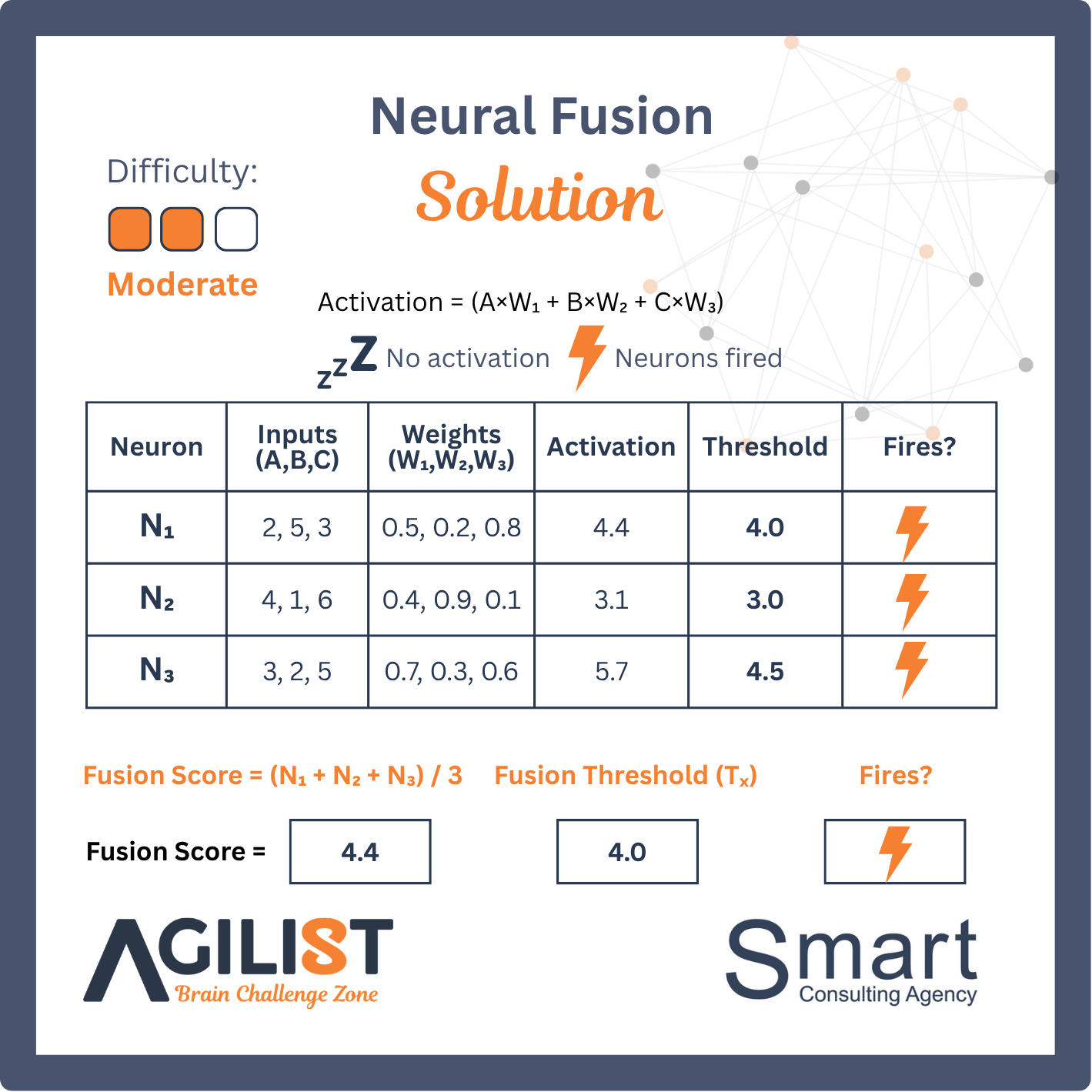
Neural Fusion
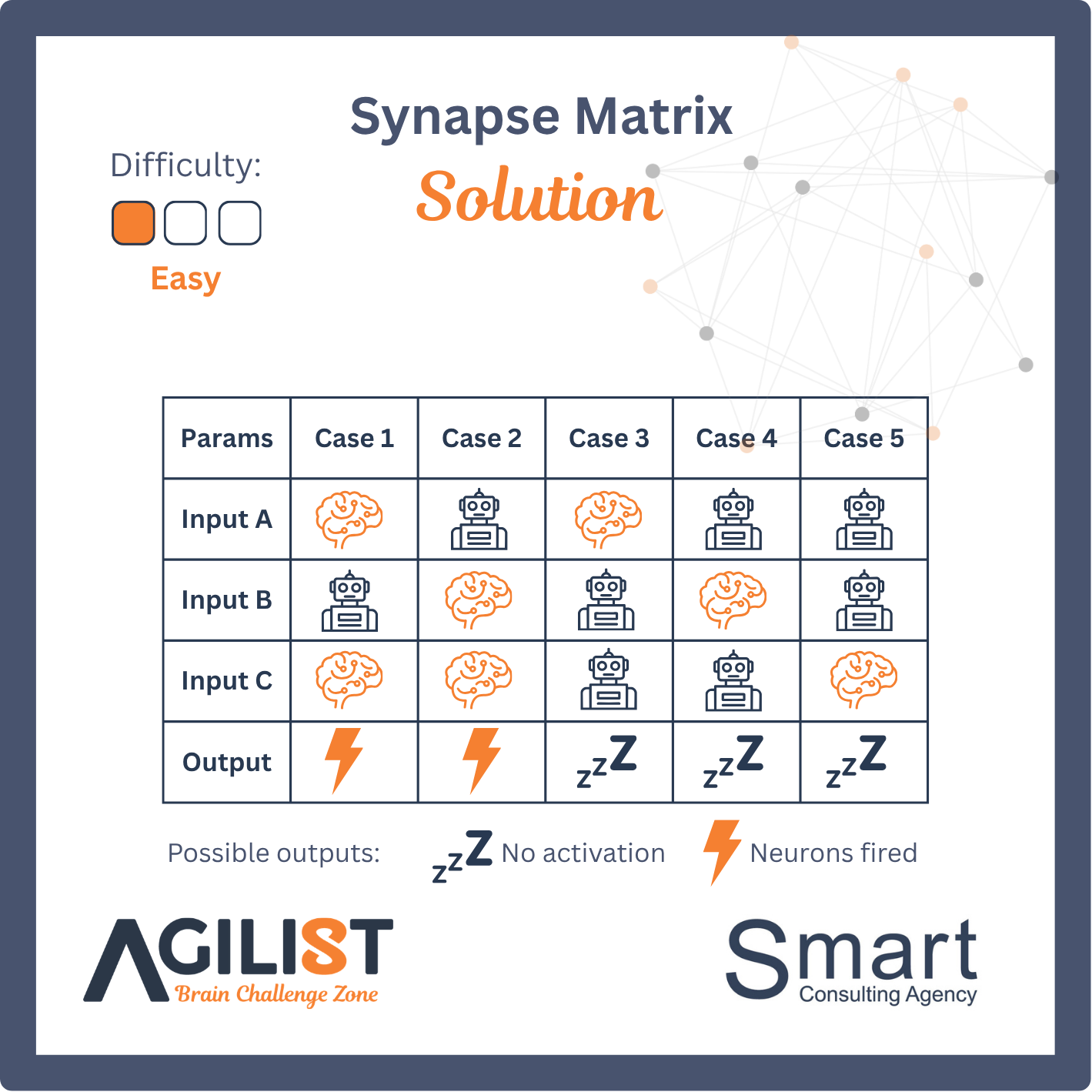
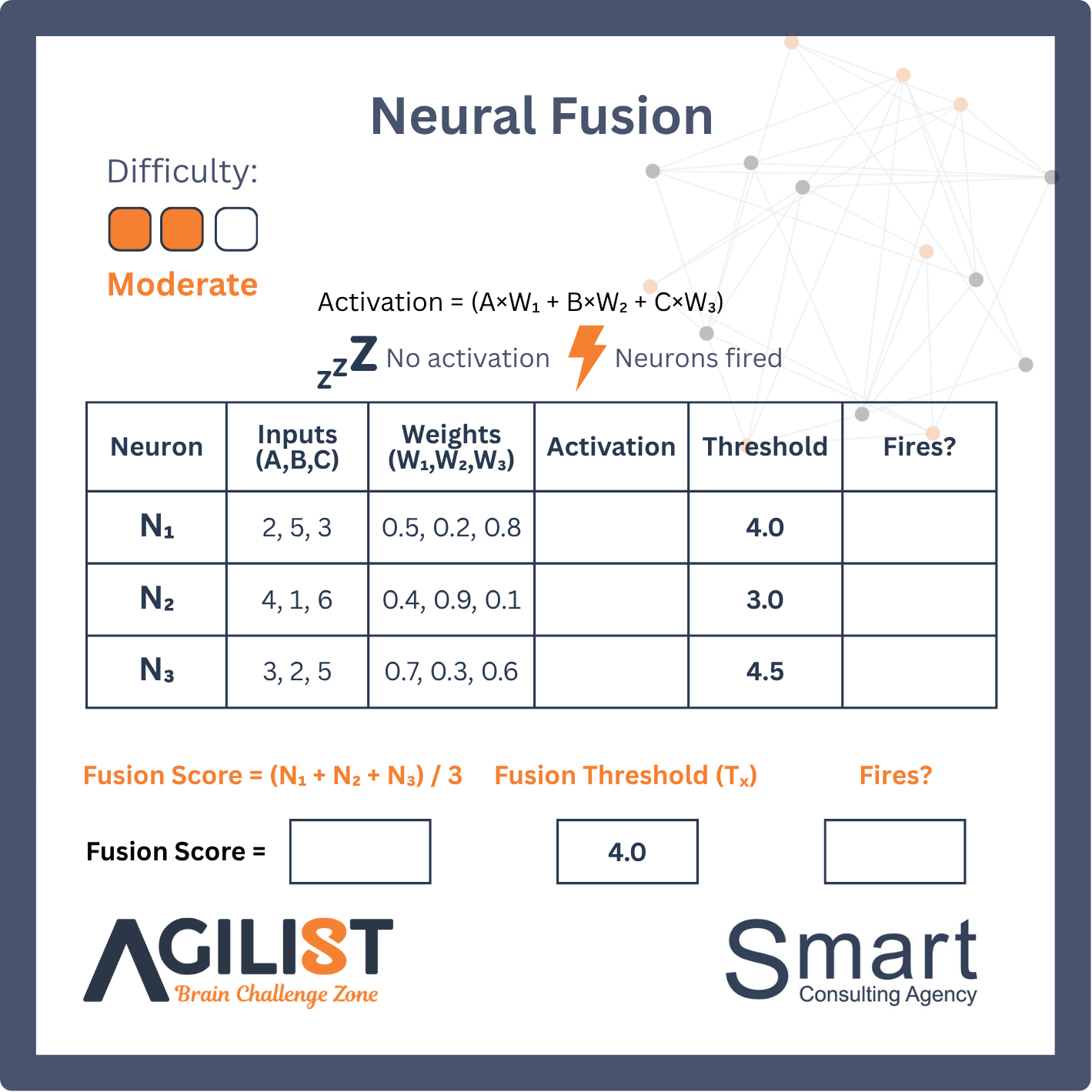
Experience how multiple neurons work together to make a single decision. This challenge mirrors the way real neural networks combine weighted inputs from different sources to produce a unified output, fundamental to deep learning.
📋 Instructions
- Calculate each neuron's activation and compare with thresholds. If the activation score is above the threshold, the neuron fires (⚡); otherwise, it remains inactive (💤).
- Compute the Fusion Score and compare with fusion threshold. If the Fusion Score is above the Fusion Threshold, the entire network fires (⚡); otherwise, it stays inactive (💤).
Download Puzzle & Solution
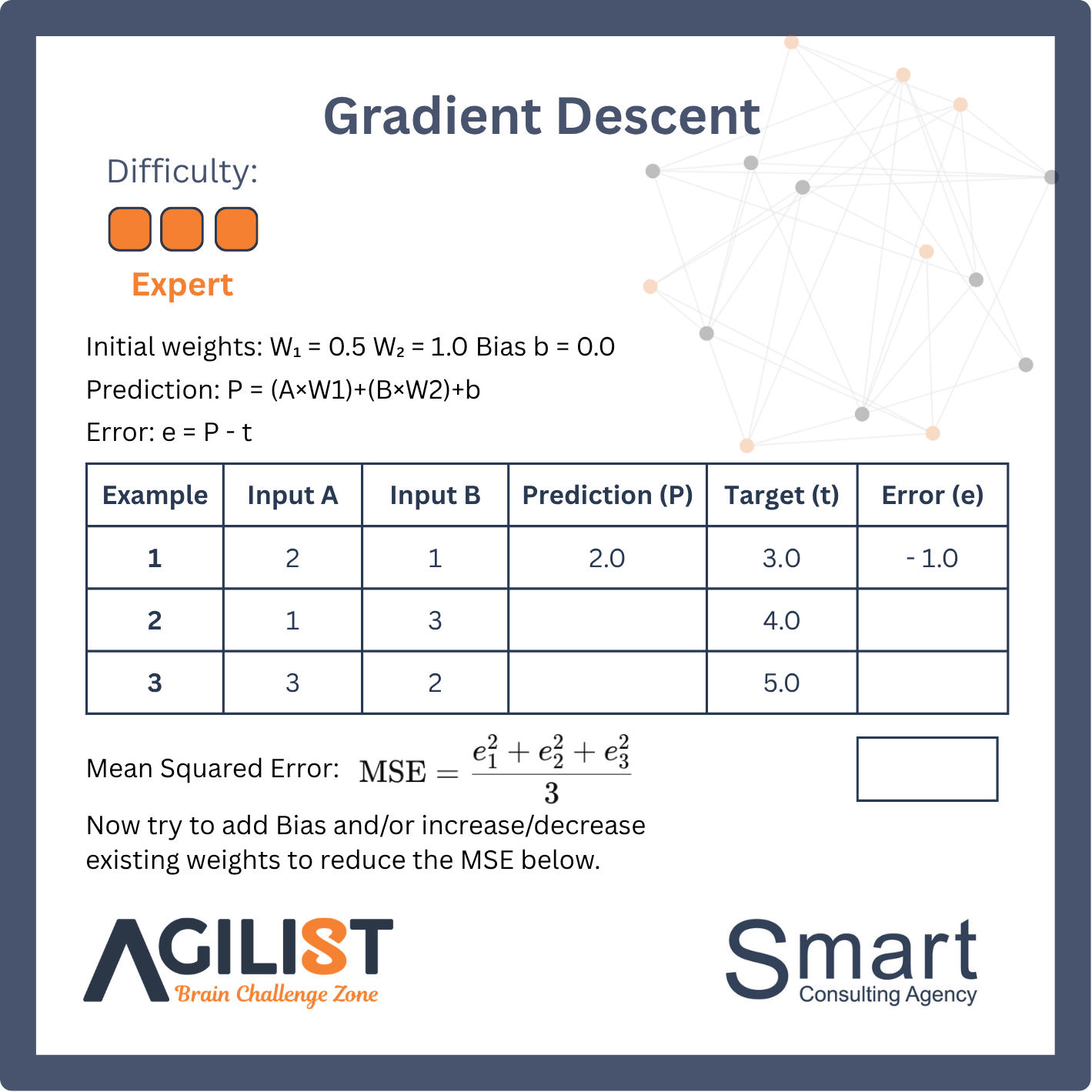
Gradient Descent
Master the core learning mechanism of AI. This advanced puzzle demonstrates how neural networks learn by iteratively adjusting weights to minimize error, the same process that powers everything from ChatGPT to self-driving cars.
📋 Instructions
- Start with given weights.
- Calculate predictions (P) and errors (t).
- Calculate MSE using the provided formula.
- Adjust weights logically to reduce the error.
- Repeat until error is minimal or network stabilizes.
Download Puzzle & Solution
AI Governance Lab
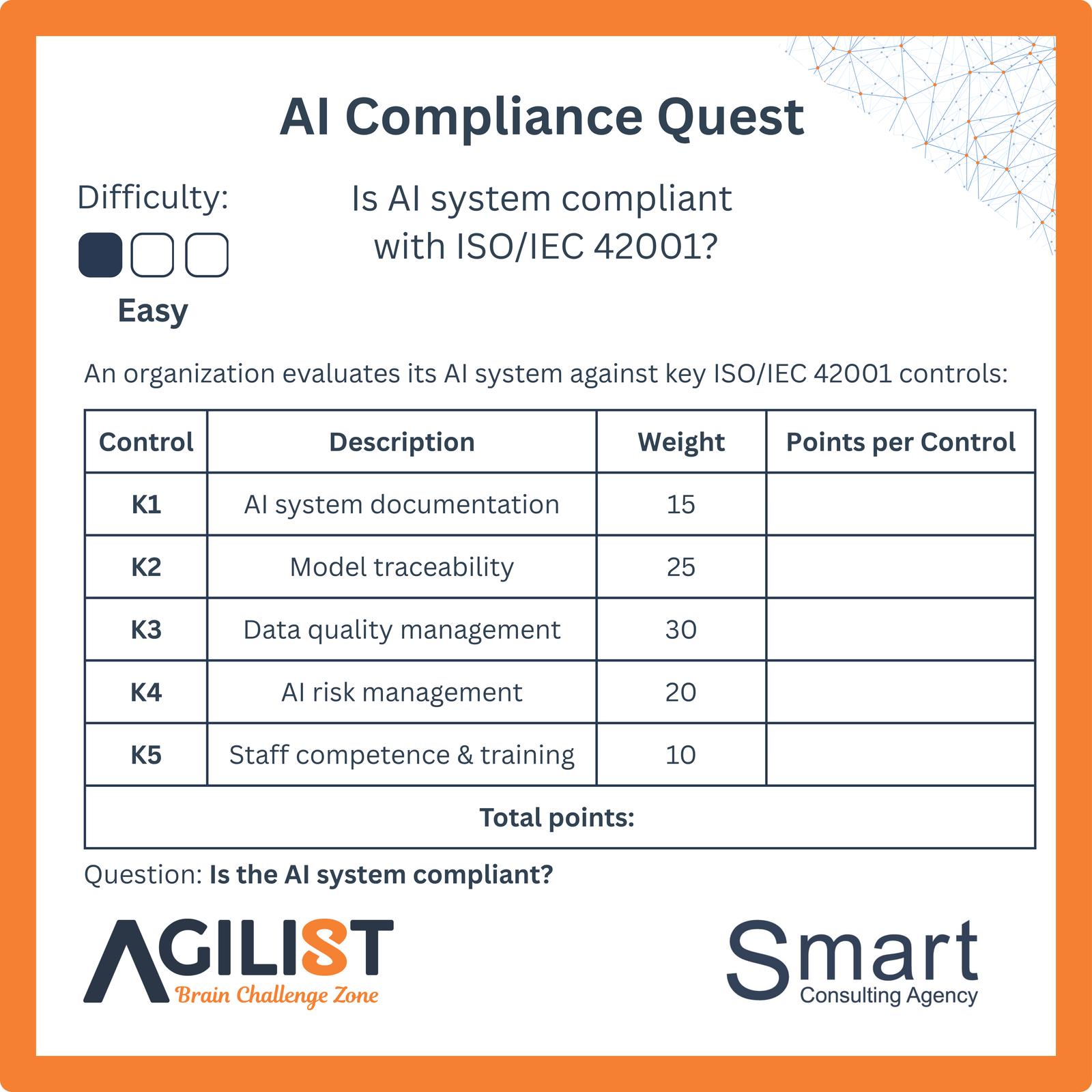

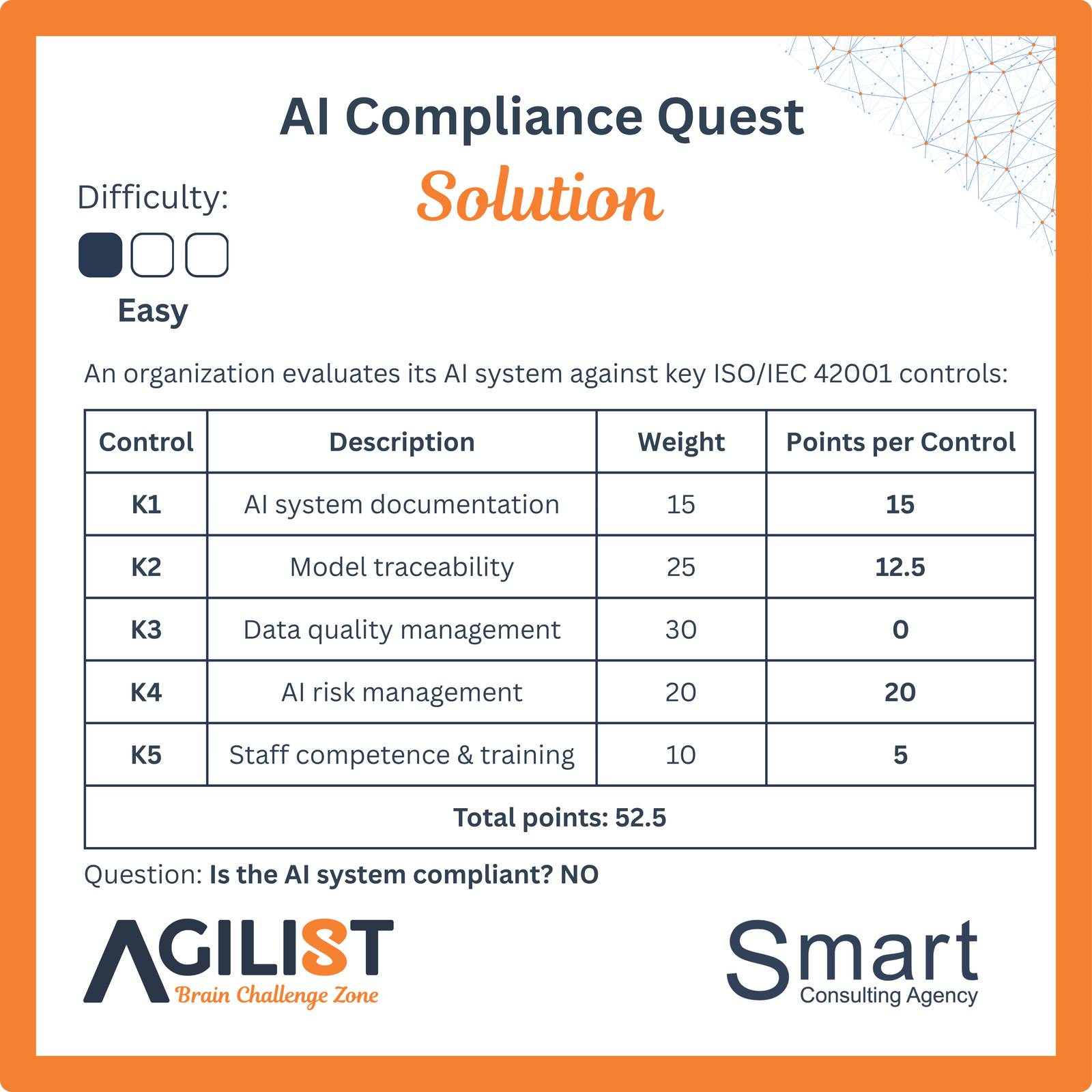
AI Compliance Quest
Evaluate structured AI controls, calculate compliance points, and determine whether the system satisfies the required conditions.
📋 Instructions

- K1 = Full
- K2 = Partial
- K3 = Not met
- K4 = Full
- K5 = Partial
- Full = 100%
- Partial = 50%
- Not met = 0%s
- K3 is mandatory.
- Minimum required: 80 point.

- Calculate points per control and total points.
- Check conditions!

Download Puzzle & Solution
AI Risk Lab
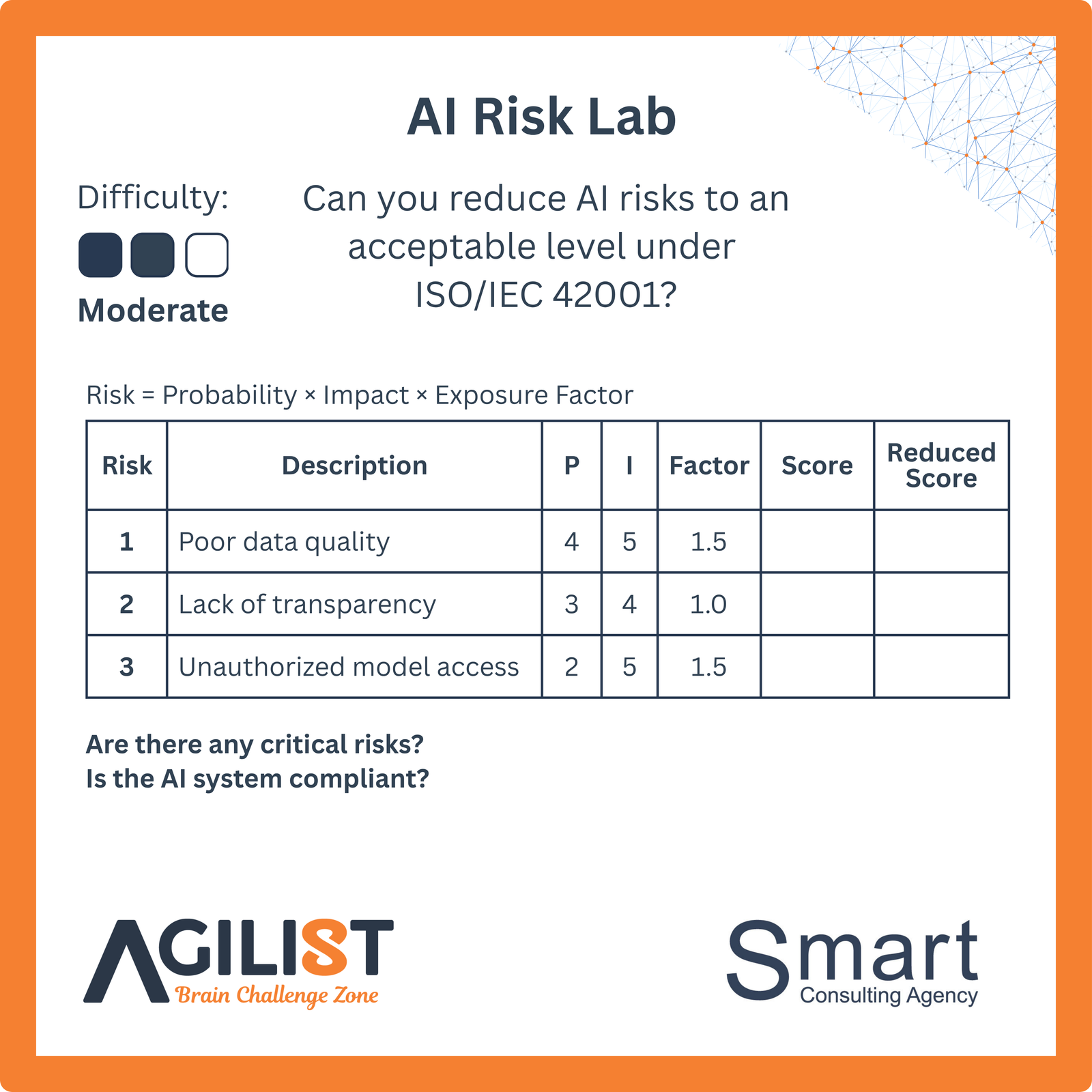
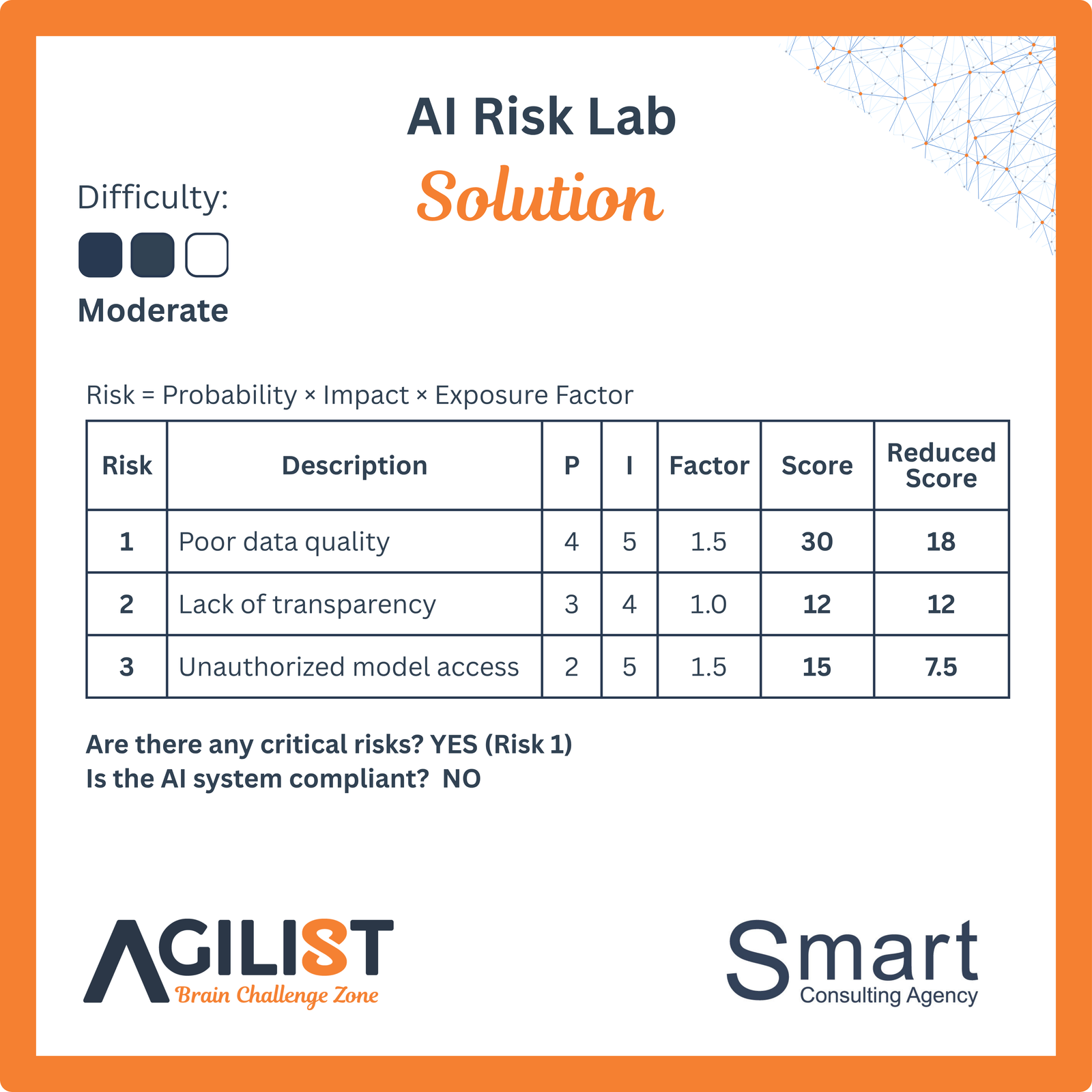
Assess initial AI risks, apply mitigating controls, and verify whether any critical residual risk keeps the system out of compliance.
📋 Instructions
- R1 → reduces risk 1 by 40%
- R2 → no control for risk 2
- R3 → reduces risk 3 by 50%
- Risk ≥ 15 = Critical
- System is NOT compliant if any critical risk remains after controls are applied and threshold is exceeded.
- Calculate initial risk scores.
- Apply controls and calculate reduced scores..
- Check threshold.
- Check rules!
Download Puzzle & Solution
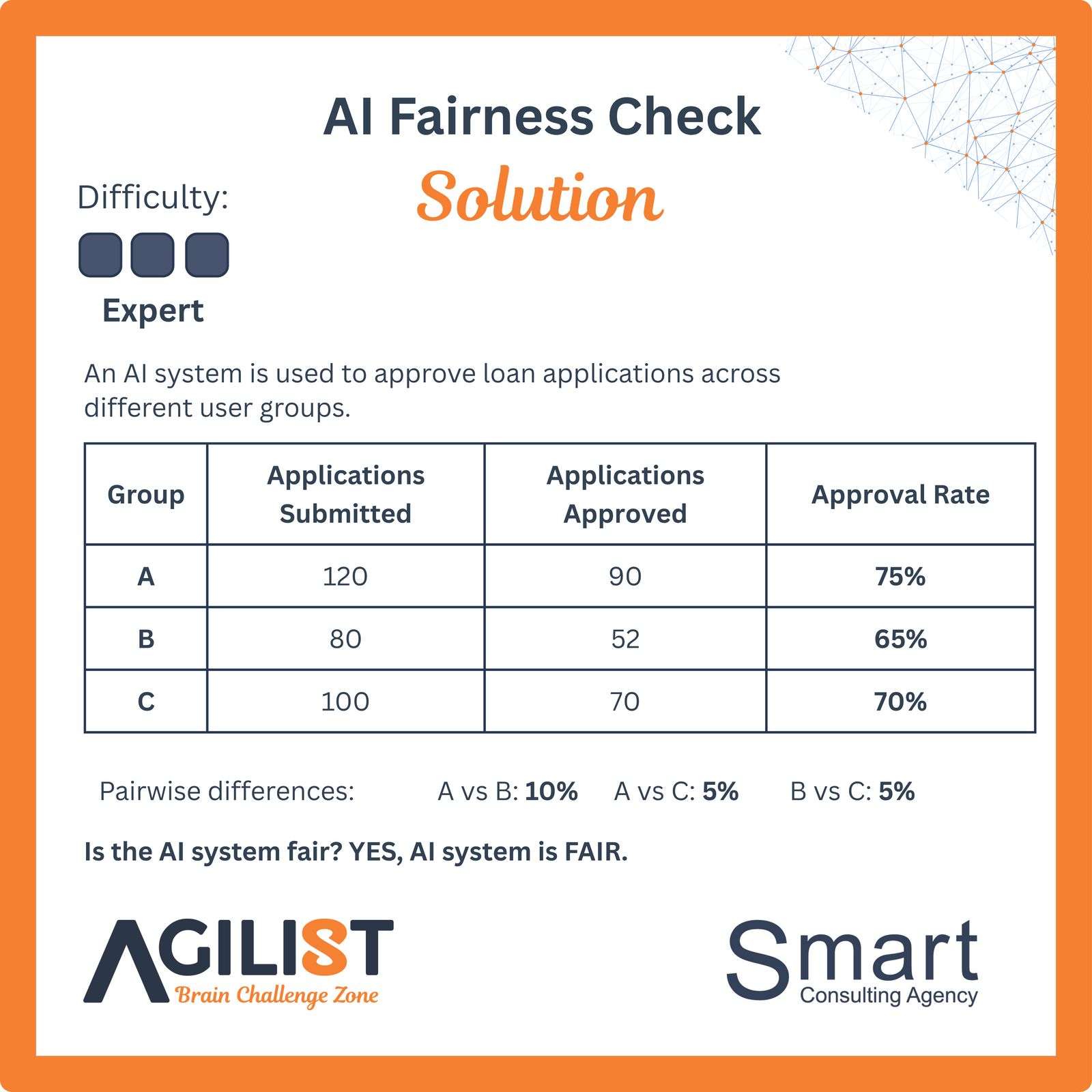
AI Fairness Check
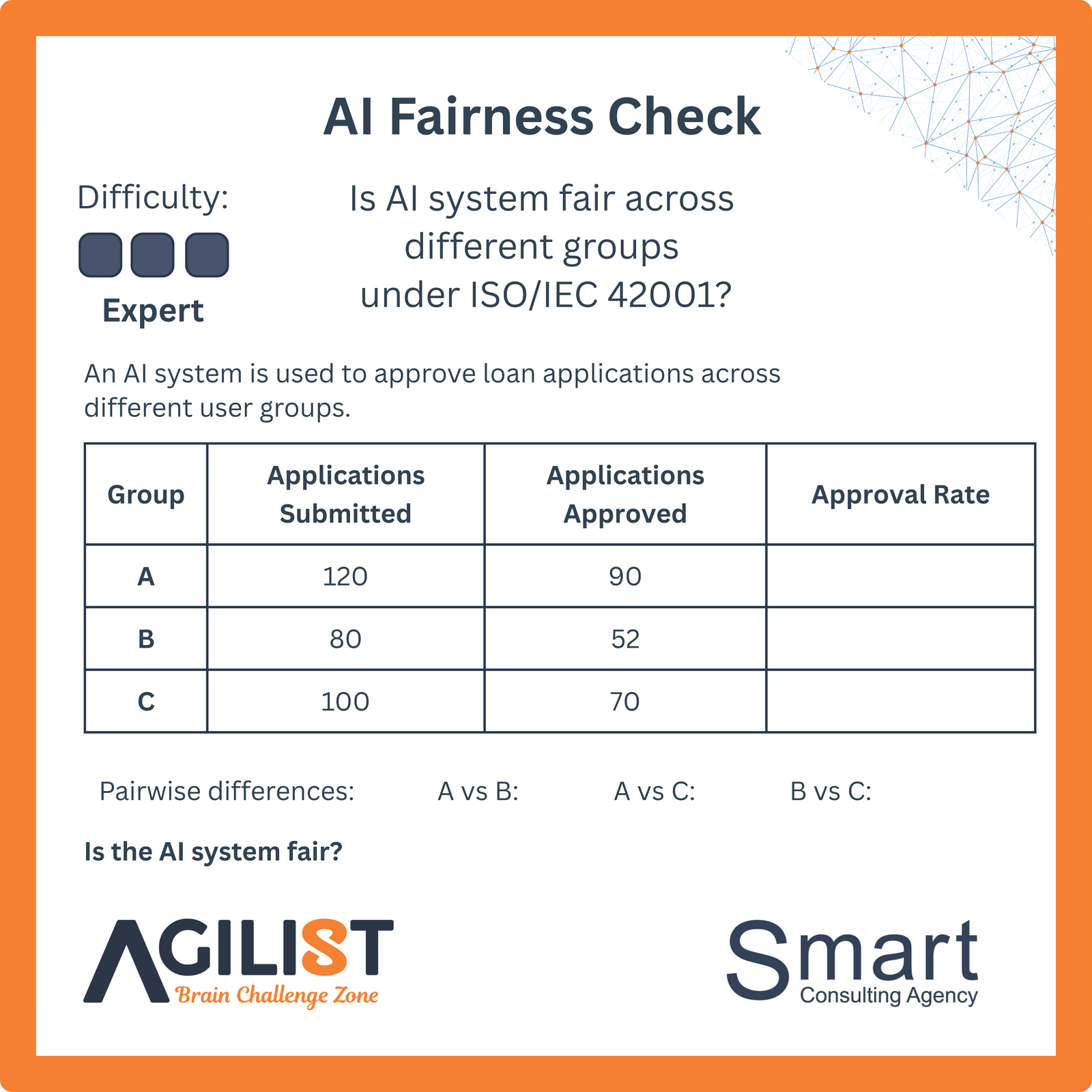
Compare approval rates across multiple groups and verify whether the model meets a defined fairness threshold.
📋 Instructions
- Fairness must be evaluated across all groups, not just one comparison.
- The difference in approval rates between ANY two groups must not exceed 10%
- Calculate approval rates.
- Check pairwise differences.
- Hit for differences (Group A - Group B).
- Apply Fairness condition.
Download Puzzle & Solution